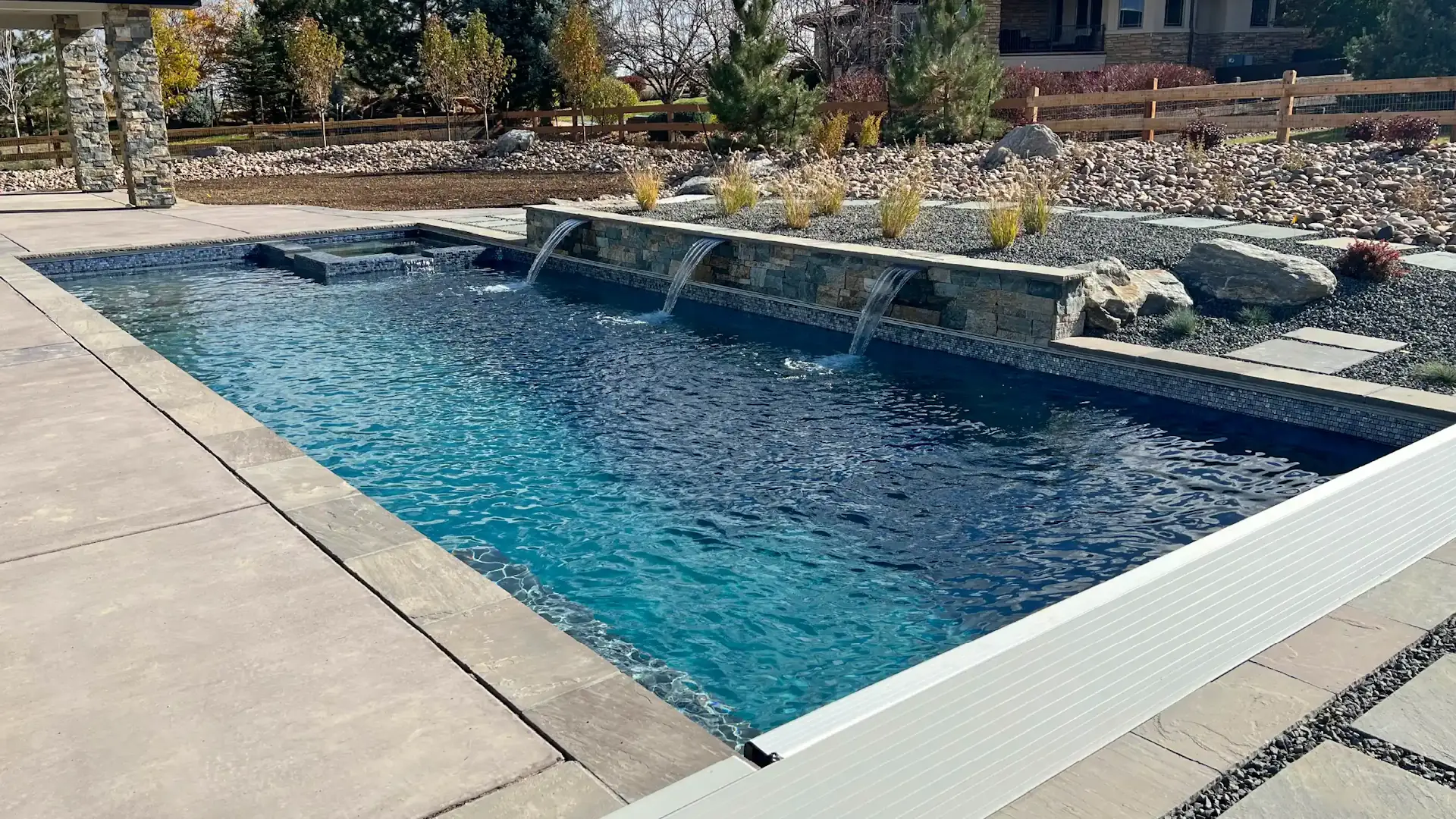
Fiberglass pools in Colorado: Your complete 2026 guide to high-altitude pool ownership
Colorado lives at a different elevation, both literally and figuratively. The Front Range stretching from Fort Collins through Denver to Colorado Springs, where the mountains meet the plains and 300 days of sunshine make outdoor living irresistible. Mountain towns where elevation creates crisp mornings even in summer. The Western Slope with its distinctive character and lower humidity than anywhere east. A state where people understand that quality of life means getting outside and making the most of Colorado’s spectacular natural setting. Pools in Colorado represent a meaningful investment in that outdoor lifestyle.
When summer heat arrives and altitude-intensified sunshine makes every afternoon feel warmer, when weekends call for family time and evenings offer that perfect dry Colorado air, your own backyard pool becomes the gathering place that defines summer.
Whether you’re planning your first pool or replacing a concrete installation that’s struggled with Colorado’s unique climate challenges, understanding what works at altitude makes all the difference. This guide walks you through what Colorado homeowners need to know about fiberglass pools built to perform in mountain states.
- Climate Resilience: Fiberglass pools are specifically engineered to handle Colorado’s unique environmental stressors, including intense UV exposure at high altitudes, dramatic temperature swings (day-to-night), and intense freeze-thaw cycles that often cause traditional concrete pools to crack.
- Efficiency and Maintenance: The non-porous gelcoat surface naturally resists algae growth—a benefit amplified by Colorado’s low humidity—and retains heat better than concrete, reducing both chemical usage and heating costs.
- Rapid Installation: A fiberglass project typically takes only 3–5 weeks, compared to the 3–6 months required for concrete. This is a critical advantage given Colorado’s shorter building season and unpredictable mountain weather.
- Long-Term Value: While initial costs are comparable to other materials, fiberglass offers a significantly lower 20-year total cost of ownership because it never requires the expensive resurfacing ($10k–$15k) that concrete pools demand every 10–15 years.
- Altitude Considerations: Successful installation requires expertise in mountain-state realities, such as managing high-evaporation rates, navigating rocky soils, and ensuring equipment is calibrated for lower air pressure.
- Permitting and Safety: Colorado homeowners must secure building and electrical permits and comply with state-required safety barriers (fencing with self-closing gates). Professional dealers typically manage these regulatory hurdles.
Starting your Colorado pool project with clear vision
The most rewarding pool projects begin with honest thinking about what you truly want to create. Before exploring designs or connecting with builders, consider these questions that shape every decision ahead:
- Who will use this pool most throughout the season? Active families need different features than fitness swimmers or adults seeking peaceful daily retreat from Colorado’s fast pace.
- What purpose drives this investment beyond cooling off? Daily exercise routines, weekend entertaining with friends, creating space for kids to play or simply claiming your own backyard sanctuary?
- How does your property influence what’s possible? Colorado properties range from compact Denver neighborhoods to sprawling mountain acreage and everything between. Quality fiberglass designs adapt beautifully across that spectrum.
• What maintenance commitment feels realistic given Colorado’s outdoor lifestyle? Your honest answer determines which materials and features serve you well long-term.
• Which safety elements provide genuine peace of mind? Fencing, covers, entry design and lighting all deserve thought upfront, particularly with children or pets.
Working with a Colorado pool builder who understands altitude considerations and Front Range climate patterns protects your investment and ensures proper installation from the start.
Leisure Pools across Colorado: Denver, Colorado Springs, Fort Collins and beyond
Colorado’s geography creates installation considerations that genuinely affect pool performance over years of ownership.
Denver and the Front Range work with altitude that intensifies UV exposure, dry air that increases evaporation and temperature swings between hot afternoons and cool evenings. Colorado Springs and the southern Front Range navigate higher elevation with even more intense sun and drier conditions. Fort Collins and northern Colorado handle similar patterns with occasional severe weather. Mountain communities face shorter seasons, more pronounced freeze-thaw cycles and elevation that affects everything from water chemistry to equipment performance.
Leisure Pools’ composite construction with vinyl ester resin reinforcement handles all these altitude-specific variations. Whether you’re on the Front Range, in the mountains or anywhere across Colorado, the engineering adapts to deliver excellent performance through demanding conditions.
For Colorado homeowners near the state’s reservoirs and lakes, from Chatfield and Cherry Creek to Horsetooth and countless mountain lakes, premium fiberglass construction complements waterfront settings through intelligent site planning and drainage management that respects natural grade.
Finding pool designs suited to Colorado properties
Pools for Colorado neighborhoods and mountain settings
Not every Colorado property offers unlimited space, and that’s perfectly fine. Many exceptional pools enhance daily living in standard backyards throughout communities from Littleton to Boulder to Loveland. Well-conceived fiberglass designs deliver features that genuinely improve quality of life without requiring sprawling lots.
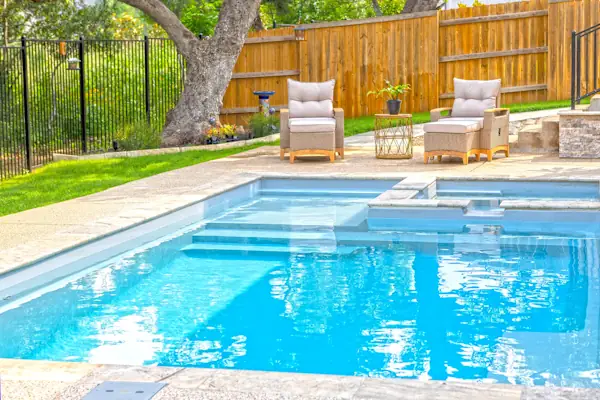
Integrated tanning ledges serve multiple purposes from peaceful adult relaxation to supervised shallow play for children. Built-in seating creates natural gathering spots where Colorado evenings make conversation easy. Entry systems designed for safe, comfortable access work for everyone from toddlers to grandparents. Thoughtful design produces outstanding results in reasonable space.
Larger pools for properties with generous room
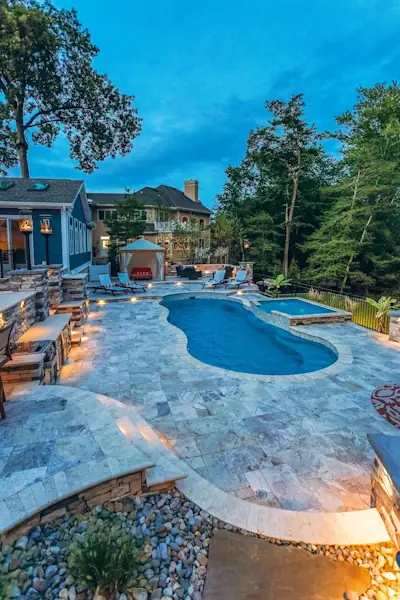
If your property provides substantial space, such as mountain acreage, a generous suburban lot or a special setting, the complete range of fiberglass designs becomes available. Sleek rectangular pools offer clean lines and dedicated lanes perfect for serious fitness. Graceful freeform designs evoke resort atmosphere with flowing transitions between swimming and relaxation zones.
Adding an integrated spa creates an outdoor environment particularly suited to Colorado, where cool mountain evenings make heated water appealing even in summer, extending enjoyment well beyond traditional pool months.
Why fiberglass outperforms concrete in Colorado’s unique climate
Construction choice matters profoundly in Colorado’s demanding altitude environment. Here’s how the options compare when you account for mountain-state realities.
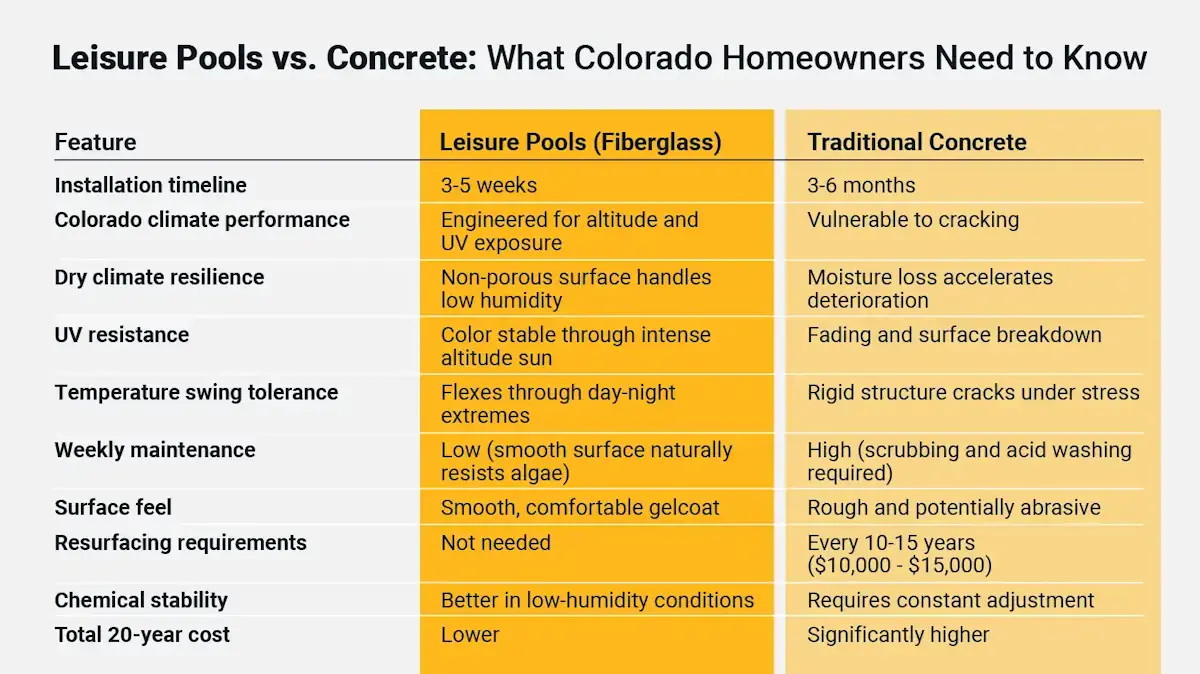
The bottom line: In Colorado’s high-altitude climate with intense UV, dry air and dramatic temperature swings, fiberglass pools with composite reinforcement deliver better performance, lower lifetime costs and easier maintenance than concrete.
Composite construction engineered for Colorado’s altitude challenges
Colorado challenges pools in ways unique to mountain states. Altitude intensifies UV exposure dramatically, breaking down materials that would last longer at sea level. Dry air increases evaporation rates far beyond what humid climates experience. Temperature swings between 90-degree afternoons and 50-degree nights create constant expansion and contraction stress. Lower air pressure at altitude affects water chemistry and equipment performance. Winter brings genuine cold with freeze-thaw cycles that test structural integrity.
Leisure Pools addresses these challenges through composite construction with vinyl ester resin reinforcement integrated throughout the pool structure. This creates a non-reactive composite that handles Colorado’s unique demands.
The integrated gelcoat color resists UV damage from altitude-intensified sunshine that would fade concrete plaster. The non-porous surface manages dry air and high evaporation without the moisture-loss deterioration that affects concrete. When temperatures swing 40 degrees from afternoon to evening, the composite structure flexes intelligently rather than cracking under thermal stress.
Concrete pools struggle in Colorado’s environment. UV exposure at altitude breaks down plaster faster than at lower elevations. Dry air pulls moisture from concrete constantly, accelerating surface deterioration. Temperature swings create stress cracks. Lower air pressure complicates curing during installation. These factors combine to shorten concrete pool lifespan significantly in Colorado compared to sea-level locations.
Colorado’s seasons and what they mean for pool ownership
One question Colorado homeowners ask frequently: How long is the swimming season at altitude?
The honest answer varies by location and personal preference. Front Range pools typically run late May through early September, shorter than lower-elevation states but still a solid season. With heating, many Colorado owners extend into May and October. Mountain properties face shorter seasons but the engineering handles altitude conditions without compromise.
Colorado’s dry climate actually helps in some ways. Lower humidity means less algae pressure during the season compared to humid states. Crystal-clear water stays that way with less chemical intervention. The smooth fiberglass surface works beautifully with Colorado’s conditions.
Winter preparation is essential across Colorado. Proper winterization protects equipment through genuine cold and altitude-specific freeze-thaw patterns. The composite construction handles these cycles without accumulating damage season after season.
Energy efficiency at altitude
Colorado utility costs and environmental consciousness make efficiency particularly important. Pool heating represents meaningful expense when extending the season or warming water during cool mountain evenings.
Fiberglass naturally insulates better than concrete. The composite structure retains heat more effectively, meaning your heater runs less. During shoulder seasons when you want just enough warmth to make swimming comfortable, or on cool Colorado evenings when heated water extends outdoor time, that efficiency becomes quite noticeable.
At altitude where temperature drops quickly after sunset, good insulation makes a genuine difference in both comfort and operating costs over the season.
Maintenance designed for Colorado’s dry climate
Colorado’s outdoor lifestyle offers too much to waste time on excessive pool maintenance. Fiberglass pools keep upkeep straightforward and genuinely manageable.
The smooth, non-porous gelcoat surface provides no foothold for algae. In Colorado’s dry climate with lower humidity than states east, this advantage compounds.
You’re not fighting the constant algae battles that humid-climate pool owners face in concrete pools.
Your realistic weekly routine:
- Skim surface debris (cottonwood seeds in spring, leaves in fall)
- Empty skimmer and pump baskets
- Test and balance water chemistry (altitude affects this)
- Run automatic cleaner as scheduled
- Monitor water level (evaporation is significant in dry air)
Monthly tasks include filter backwashing. That covers normal maintenance for most weeks.
No acid washing. No resurfacing projects years ahead. No constant chemistry battles. Simply pool ownership that leaves abundant time for actually enjoying Colorado’s incredible summers.
Installation suited to Colorado’s building season
Colorado’s outdoor season feels precious, making efficient installation important. Construction that drags through summer represents genuine loss of mountain-state enjoyment.
Fiberglass pools arrive as precision-manufactured shells, enabling efficient installation:
- Week 1: Site preparation and excavation
- Week 2: Pool delivery and placement, plumbing and electrical rough-in
- Week 3: Backfill and deck preparation, equipment installation
- Weeks 4–5: Deck completion, final connections, water fill and startup
Concrete installation requires sequential on-site phases: steel, gunite, curing (complicated at altitude), plaster, more curing and filling. This typically runs three to six months. Colorado’s unpredictable spring weather and altitude considerations can extend concrete timelines further.
Choose fiberglass and you’re swimming this summer. Choose concrete and you’re managing construction instead of enjoying Colorado.
Colors that endure through Colorado’s intense sun
Leisure Pools offers carefully selected gelcoat colors that maintain beauty through Colorado’s altitude-intensified UV exposure. These aren’t surface coatings. They’re integral to the gelcoat structure, meaning they don’t fade through relentless Colorado sunshine, don’t deteriorate through temperature extremes and require no periodic renewal.
The smooth surface feels better during use. Comfortable underfoot. Gentle on skin. No rough spots that catch swimsuits. Better experience in every way that matters.
After years of Colorado seasons, which include intense summer sun, freezing winters and dramatic temperature swings, your pool maintains the same appearance it had at installation.
Ready to explore possibilities for your Colorado property?
Connect with a certified Leisure Pools dealer who understands altitude considerations and Front Range climate.
Browse Leisure Pools designs | Find a Colorado dealer near you
Understanding pool investment in Colorado
Every project reflects unique circumstances, but understanding investment factors helps you plan with confidence.
Foundation pool investment:
- Pool size and shape: Larger installations and complex designs increase investment
- Built-in features: Tanning ledges, integrated spas and custom elements add value and cost
- Color selection: Premium gelcoat colors may carry modest additional investment
Colorado installation considerations:
- Altitude factors: Elevation affects installation approach and equipment specifications
- Soil characteristics: Rocky soils common in some areas influence excavation
- Property access: Mountain properties may require specialized equipment
- Dealer location: Transportation across Colorado’s geography varies
- Permits and inspections: Municipal requirements typically range $200 to $1,000 or more
- Regional variations: Front Range versus mountain communities create different considerations
Additional project elements:
- Deck materials: Concrete, pavers or stone at varying investment levels
- Safety barriers: Colorado-required fencing with material and design options
- Equipment selections: Heaters for season extension, covers (essential in dry climate), lighting and automation
- Landscape completion: Xeriscape-friendly options suit Colorado’s water consciousness
The critical perspective: Focus on 20-year total ownership cost rather than just initial installation. Zero resurfacing expenses, reduced chemical needs and superior performance in Colorado’s demanding climate mean fiberglass costs thousands less than concrete over the pool’s lifetime.
Colorado pool installation: why altitude expertise matters
Colorado’s altitude creates installation considerations that sea-level builders may not understand.
Lower air pressure affects concrete curing, making fiberglass’s factory-controlled manufacturing a significant advantage. Rocky soils in some areas require specialized excavation approaches. Temperature swings during installation affect timing and materials.
Front Range properties work with relatively stable conditions but intense UV and dry air. Mountain installations face elevation that affects everything from equipment selection to winterization requirements.
One-piece fiberglass construction performs excellently across all Colorado scenarios. No seams to fail. No liner to deteriorate in dry air. One solid shell that handles altitude conditions reliably.
Finding a builder with genuine Colorado experience and understanding of altitude-specific requirements protects your investment.
Pool permits and regulations across Colorado
Colorado requires building permits for residential pool construction. Specific requirements vary by municipality but typically include:
- Building permits from local building departments
- Electrical permits covering pumps, heaters and lighting
- Barrier compliance (Colorado requires fencing with self-closing, self-latching gates)
- Setback requirements (minimum distances from property boundaries)
- Possible HOA approvals in many Colorado communities
- Water-use considerations in some jurisdictions
Larger Front Range cities maintain detailed requirements. Mountain communities may have additional considerations. Smaller towns tend toward streamlined processes while maintaining safety standards.
Your Leisure Pools dealer should manage permitting as standard service. Confirm this before signing contracts.
Maintaining pools through Colorado’s distinct seasons
Colorado’s four seasons each bring their own maintenance rhythm, complicated slightly by altitude.
During pool season (typically late May through early September on Front Range):
- Regular surface skimming
- Weekly basket cleaning
- Weekly water testing (altitude affects chemistry)
- Scheduled cleaner operation
- Water level monitoring (evaporation is significant)
Monthly attention:
- Filter backwashing
- Equipment checks
- Water additions to offset evaporation
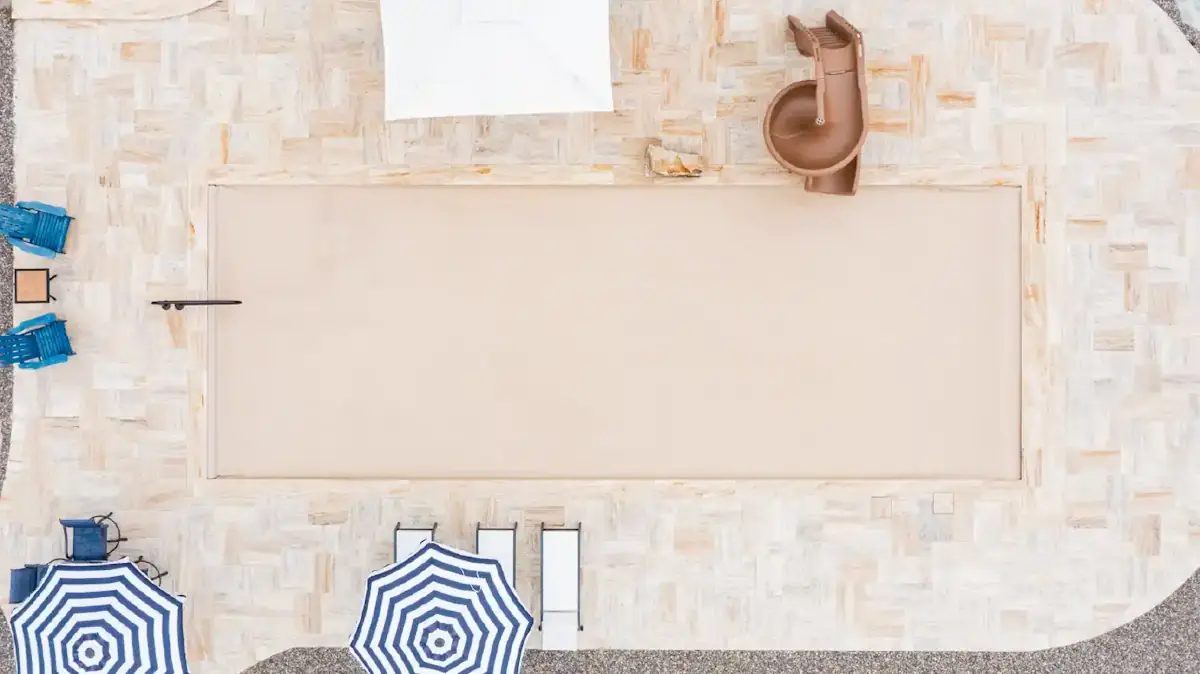
Colorado-specific pool maintenance considerations
Spring brings cottonwood seeds that can overwhelm pools in some areas. A cover helps during peak weeks. When debris does accumulate, smooth fiberglass cleans easier than rough concrete.
Summer’s intense UV affects chemistry differently than at sea level. Regular testing keeps you ahead of issues. Lower humidity means less algae pressure than humid climates.
Fall arrives early in mountains, later on Front Range. Cool evenings make heated pools particularly appealing for extending the season.
Winter preparation is essential. Proper winterization protects equipment through cold and altitude-specific conditions. Most Colorado pools close September or October through May.
Why Colorado families choose Leisure Pools
Still weighing your decision? Here’s what Colorado pool owners consistently value:
Making the most of Colorado summers: The season feels precious at altitude. A pool that’s ready when summer arrives matters when you have limited pool months.
Creating the gathering place: A pool makes your home the natural spot for family and friends throughout Colorado’s spectacular summers.
Protecting property value: Quality pools increase home appeal in Colorado’s competitive markets where outdoor amenities matter significantly.
Lower lifetime investment: Eliminating resurfacing costs and reducing chemical needs saves thousands over 20 years.
UV resistance that matters: Colorado’s altitude-intensified sun destroys materials quickly. Fiberglass holds up where concrete fails.
Frequently asked questions about Leisure Pools in Colorado
Ready to begin your Colorado pool journey?
Colorado’s high-altitude climate with intense UV, dry air and dramatic temperature swings demands pools engineered to perform through unique challenges. Leisure Pools delivers composite construction with vinyl ester resin reinforcement and proven performance at altitude.
The result is a pool requiring less maintenance, costing less over time and providing more reliable enjoyment than concrete alternatives struggling with Colorado’s demanding conditions. That’s what Colorado homeowners count on season after season.
Working with a certified Leisure Pools dealer ensures proper installation, comprehensive warranty protection and a builder who understands altitude-specific requirements.
Next steps:
Explore pool designs: Browse Leisure Pools’ complete collection for designs suited to Colorado properties from Front Range neighborhoods to mountain settings.
Understand your investment: Connect with a certified Leisure Pools dealer for accurate cost guidance based on your specific property, location and altitude considerations.
Start planning: Discuss your vision with a local expert who understands Colorado climate, altitude factors and building requirements.
Contact a local Leisure Pools dealer today to begin creating your Colorado backyard retreat.
 United States
 Canada
 Australia
 New Zealand
 Europe
 Find a Dealer
 (855) 857 7527
 Leisure Pools USA