Fiberglass pools in Massachusetts: your 2026 guide to year-round outdoor living in the Bay State
Summer in Massachusetts is something special. The days are warm and long, the evenings cool off just enough to make being outside genuinely comfortable, and the whole season feels worth savoring because everyone knows it doesn’t last forever. For Bay State families, a backyard pool isn’t just a place to swim; it’s the center of everything good about the warm months.
But Massachusetts is also a demanding place to put a pool. The winters are real. The soil is complicated. The coastal areas have their own set of challenges. And the swimming season, while glorious, is shorter than in warmer states. Getting the construction right from the beginning matters more here than almost anywhere.
This guide from Leisure Pools walks Massachusetts homeowners through everything worth knowing about fiberglass pool ownership in the Bay State, from the coastal towns of the South Shore and Cape Cod to the suburbs west of Boston to the Pioneer Valley and the Berkshires.
- Challenging Environment: Massachusetts’s rigorous winters (freeze-thaw cycles), varied soils (glacial clay, ledge rock, coastal sand), and a short 4–5 month swimming season place high demands on pool structures.
- Fiberglass Advantage: Leisure Pools’ Composite Armour™ one-piece fiberglass construction flexes with soil movement and resists moisture absorption, avoiding the cracking and freeze-thaw damage typical of traditional concrete.
- Faster Installation: Fiberglass pools install in just 3 to 5 weeks, compared to 3 to 6 months for concrete, maximizing the available summer season.
- Lower Maintenance & Long-Term Cost: The non-porous gelcoat surface naturally resists algae, requires fewer chemicals, never needs resurfacing (unlike concrete’s 10–15 year cycle), and lowers overall long-term ownership costs.
- Permitting & Planning: Massachusetts requires building, electrical, and barrier/fencing permits (plus potential conservation or HOA approvals), making fall/winter planning ideal for a spring installation.
What makes Massachusetts a challenging environment for pools?
Massachusetts sits at the intersection of several conditions that test pool construction year after year.
New England winters bring sustained cold with genuine freeze-thaw cycles that work on any structural vulnerability a pool has. The ground freezes, thaws and refreezes through late fall and winter in ways that create persistent stress on rigid pool structures. Spring arrives with significant moisture as snowmelt and rain saturate the soil simultaneously.
Massachusetts soil is famously varied and frequently difficult. Glacial till covers much of the state, leaving a mix of clay, loam and rocky conditions that shift with moisture changes throughout the year. Ledge rock sits just below the surface in many communities across the eastern part of the state, requiring specialized excavation. Coastal communities from Scituate to Sandwich deal with sandy soil, high water tables and the structural demands that come with proximity to the ocean.
The swimming season in Massachusetts typically runs from late May or early June through September, with some homeowners extending into October with heating. That defined window makes getting a pool right and keeping it performing well especially important. A pool that requires constant attention or frequent repairs eats into the months that were supposed to be about relaxation.
How does Composite Armour™ construction handle Massachusetts conditions?
These are the questions that matter most for long-term pool ownership across the Bay State.
Massachusetts soil movement, whether from glacial clay expanding and contracting with moisture, sandy coastal ground shifting with tidal influence or rocky terrain settling unpredictably, creates persistent stress on rigid concrete structures. That stress accumulates invisibly over years of seasonal cycles before it surfaces as visible cracking and expensive repair work.
Leisure Pools’ Composite Armour™ construction addresses these conditions with engineering designed specifically for demanding environments:
Composite Armour™ structural shell combines premium fiberglass with high-performance resins to create a non-reactive composite structure that flexes intelligently with ground movement rather than resisting it rigidly. This flexibility is what allows the pool to handle Massachusetts soil conditions season after season without accumulating progressive structural damage.
Durable gelcoat surface guards against UV exposure, chemical contact and moisture intrusion with a smooth, non-porous finish that resists algae naturally and holds its appearance through New England’s full four seasons — including the winters that would accelerate deterioration in lesser construction.
One-piece shell construction eliminates seams and joints where ice formation and ground movement create the most damage in concrete pools. There are no weak points for freeze-thaw cycles to exploit over time.
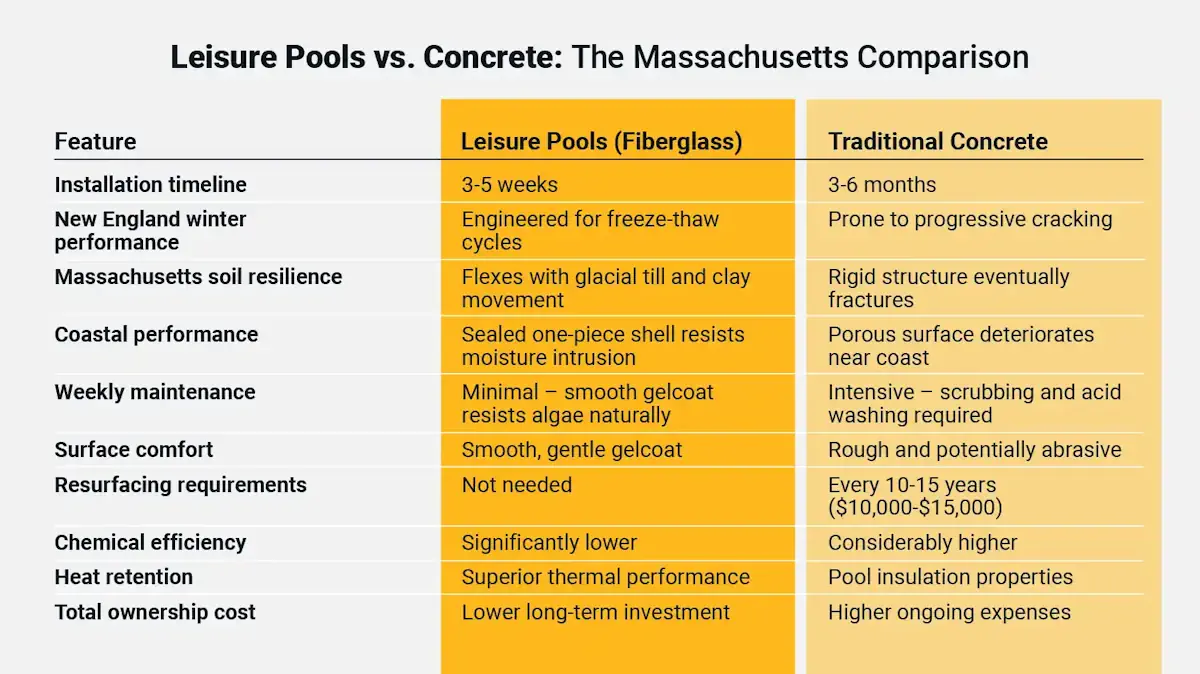
The bottom line: In Massachusetts, where winters are genuine, soil conditions are complicated and the swimming season is precious, Leisure Pools’ Composite Armour™ construction delivers better performance, lower lifetime costs and far less maintenance than concrete.
How does a fiberglass pool handle Massachusetts winters?
This is the question that matters most for Bay State homeowners, and it deserves a straightforward answer.
Concrete pools absorb moisture through their porous surfaces. When that moisture freezes, it expands inside the concrete and creates micro-fractures that worsen with every freeze-thaw cycle. The damage builds silently over years before it becomes visible, and by then the repair costs are significant.
Leisure Pools’ Composite Armour™ construction works differently. The smooth, non-porous gelcoat surface doesn’t absorb moisture the way concrete does. The flexible composite structure handles the expansion and contraction of freeze-thaw cycles without accumulating internal stress. The one-piece shell has no seams where ice can gain purchase and cause progressive damage.
With proper winterization protecting your equipment, a Leisure Pool handles Massachusetts winters reliably year after year. The pool that goes into the ground this spring will come out of winter just as sound in its fifteenth year as it was in its first.
What is the swimming season like in Massachusetts?
The swimming season varies somewhat by region, which matters for planning.
The greater Boston area and eastern Massachusetts typically enjoy comfortable swimming from late May through September, with some homeowners extending into early October with modest heating. The South Shore and Cape Cod communities benefit from coastal moderation, as water temperatures off the Atlantic keep the air slightly warmer on both ends of the season. The Pioneer Valley and central Massachusetts follow a similar primary season pattern to eastern Massachusetts. The Berkshires and western Massachusetts run a somewhat shorter season due to cooler temperatures and elevation.
Most Massachusetts homeowners enjoy roughly four to five months of comfortable pool use. That defined season makes every week count, which is one more reason why low-maintenance construction matters here more than in states where summer never really ends.
What does fiberglass pool installation look like in Massachusetts?
Massachusetts presents some specific installation considerations worth understanding before you begin.
Ledge rock is a reality in many communities across the eastern part of the state. When ledge is present, excavation requires specialized equipment and expertise. A qualified builder will assess your site before work begins so you know what to expect. Sandy coastal soils require careful attention to drainage engineering and backfill selection. Clay-heavy areas in the interior of the state need thoughtful excavation and engineered backfill to prevent soil movement from affecting the pool over time.
The fiberglass installation timeline:
- Week 1: Site assessment, preparation and excavation — including any necessary ledge work or drainage engineering
- Week 2: Pool delivery and placement, plumbing and electrical foundation work
- Week 3: Engineered backfill, deck preparation and equipment installation
- Weeks 4–5: Deck completion, final connections, water fill and system startup
Concrete installation in Massachusetts requires sequential outdoor phases through New England’s unpredictable spring weather: steel framework, gunite application, extended curing, plastering and additional curing before the pool can be filled. That process routinely runs three to six months. Late spring starts mean construction stretches well into summer. With fiberglass, you can be swimming by July even with an April start.
What pool designs work well on Massachusetts properties?
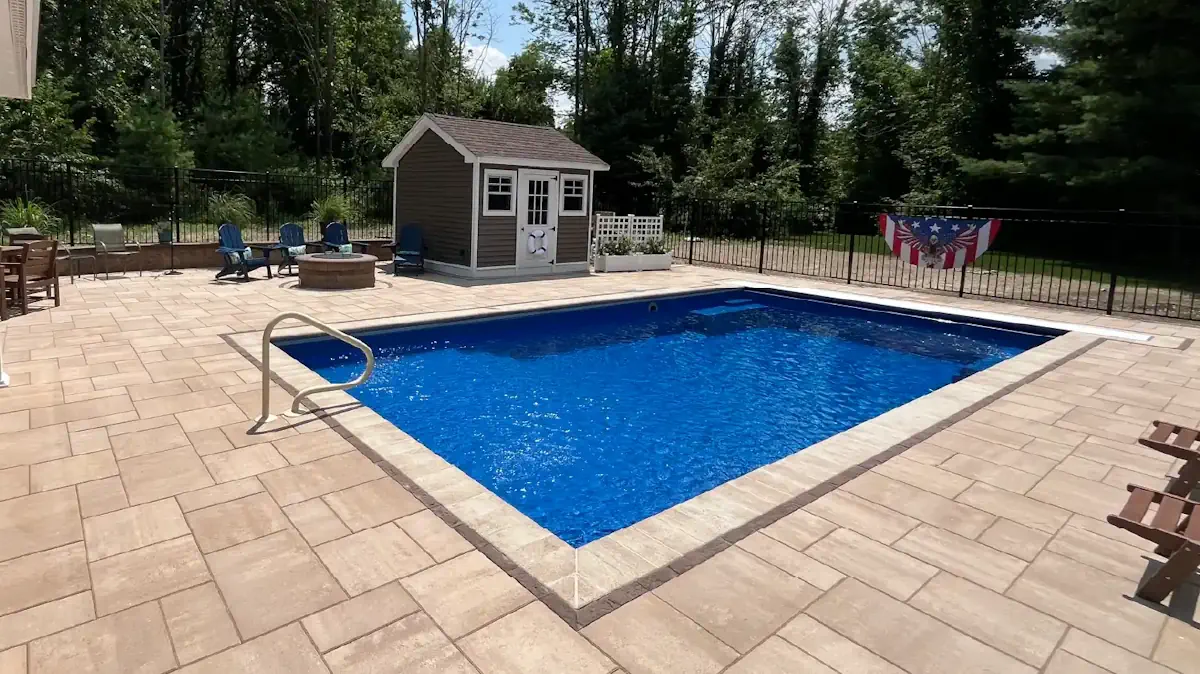
Pools for compact and suburban properties
Massachusetts communities range from tight urban lots in Newton and Brookline to more generous suburban properties in Medfield, Duxbury or Northborough. Even on a smaller lot, thoughtfully proportioned fiberglass designs create a pool experience that feels complete rather than compromised.
Integrated tanning ledges offer a shallow-water space that works for young children, sun loungers and dogs with equal enthusiasm. Built-in seating creates natural gathering areas that make a smaller pool feel more social. Entry systems that work easily for all ages make the pool genuinely accessible to everyone in the household from June through September.
Pools for larger properties
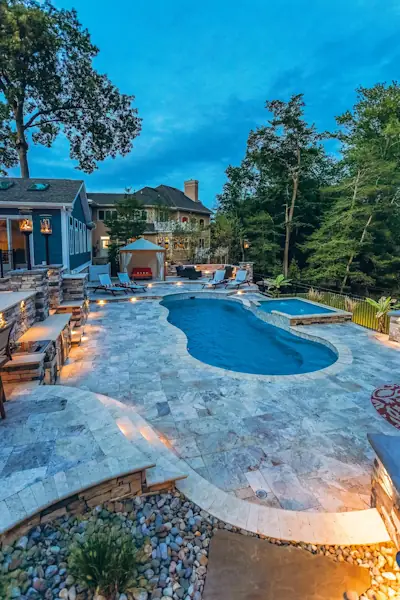
If your Massachusetts property offers generous outdoor space, whether on a South Shore waterfront lot, a Berkshires acreage property or a spacious suburban yard, the full range of fiberglass pool designs opens up. Graceful freeform pools create the kind of resort atmosphere that suits New England’s landscape beautifully. Sleek rectangular designs appeal to lap swimmers and those who want architectural precision in their outdoor space.
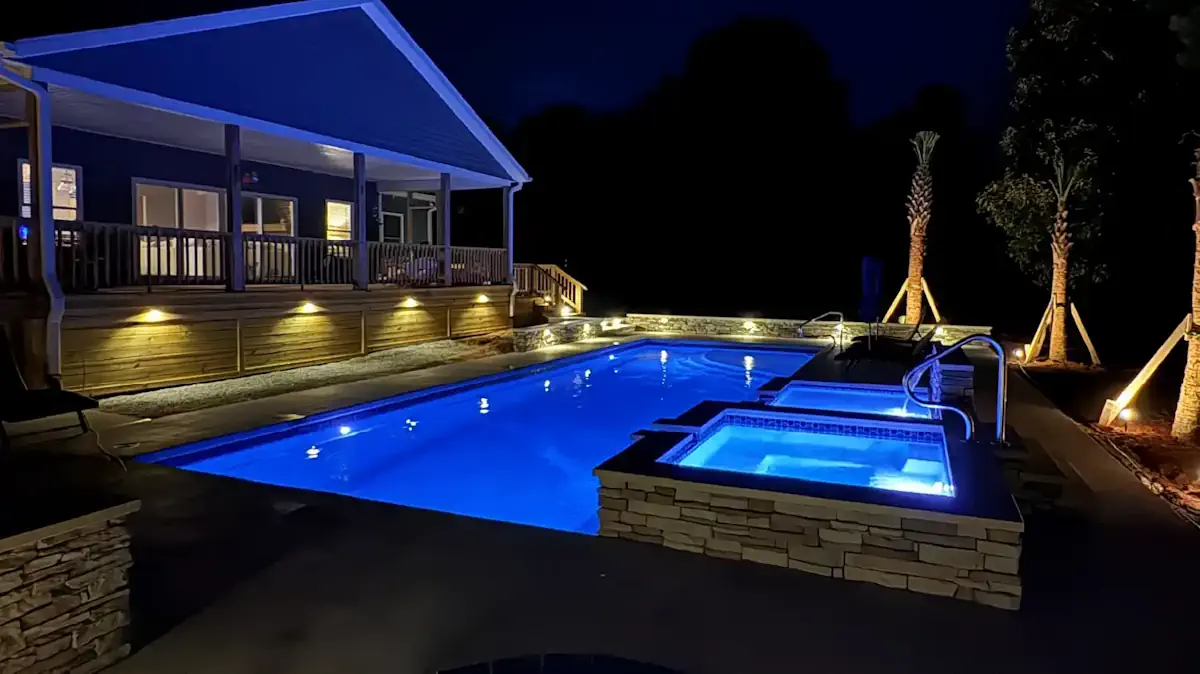
Integrated spas extend your outdoor season meaningfully in Massachusetts. Those warm September and early October evenings when the pool itself feels too cool are perfect spa evenings, and a spa that’s already part of your pool structure makes that extension effortless.
What does pool maintenance look like in Massachusetts?
Massachusetts’s defined season makes efficient maintenance particularly valuable. Every clear, warm day matters.
During the primary swimming season:
- Regular surface skimming and debris removal
- Filter basket maintenance and cleaning
- Water chemistry monitoring and adjustment
- Automatic cleaner operation as scheduled
Monthly attention:
- Filter system backwashing
- Equipment performance check
- Water level monitoring during warm, dry stretches
Massachusetts-specific pool maintenance insights
Spring pollen in Massachusetts can be significant, particularly in wooded suburban communities west and south of Boston. An automatic cover provides real protection during peak pollen weeks. When pollen does reach the smooth gelcoat surface, cleanup is considerably simpler than pulling it out of concrete’s porous texture.
Massachusetts summers are humid enough to create algae pressure on any pool. The smooth, non-porous gelcoat naturally resists algae colonization in a way that concrete surfaces cannot, keeping chemical demands lower through the season.
Fall in Massachusetts can be genuinely beautiful, and a modestly heated pool is perfectly comfortable into October in many parts of the state. The turning leaves, cooler evenings and lighter maintenance demands make fall pool ownership a quiet pleasure.
Winter preparation is essential across Massachusetts. Proper winterization protects equipment through genuine cold. Most Bay State pools close from mid-October through May, depending on location and personal preference.
Understanding your pool investment in Massachusetts
Every Massachusetts project reflects its specific location, property conditions and design vision.
Foundation investment elements:
- Pool dimensions and design: Larger installations and more intricate designs increase investment
- Integrated features: Tanning ledges, spas and custom elements add lasting value
- Color selection: Premium gelcoat colors may carry a modest additional investment
Massachusetts-specific installation considerations:
- Ledge rock: Common across eastern Massachusetts and requiring specialized excavation
- Coastal conditions: South Shore, Cape Cod and North Shore properties may carry salt air specifications and drainage requirements
- Property access: Tight lots in denser communities may require crane services for pool placement
- Permits and inspections: Municipal requirements typically range from $200 to $1,000 or more
- HOA requirements: Many Massachusetts communities, particularly newer suburban developments, require HOA approval before work begins
Additional enhancement investments:
- Deck materials: Concrete, elegant pavers or natural stone complement New England architecture
- Safety barrier systems: Massachusetts requires fencing with self-closing, self-latching gates
- Equipment selections: Heaters, automatic covers, LED lighting and automation systems
- Landscape integration: Plantings and hardscaping that suit the New England setting
The long-term perspective: Over 20 years of Massachusetts ownership, fiberglass pools cost significantly less than concrete alternatives. No resurfacing expenses, lower chemical requirements and better performance through four-season conditions make the total ownership advantage clear over time.
Pool permits and regulations in Massachusetts
Massachusetts requires building permits for all residential pool construction, with specific requirements varying by city and town.
Standard requirements across the state:
- Building permits from your local building department
- Electrical permits covering pumps, heating systems and lighting
- Barrier compliance: Massachusetts requires fencing with self-closing, self-latching gates
- Setback compliance with required distances from property lines and structures
- Coastal and waterfront properties may require additional state or conservation commission permits
- HOA approval in many Massachusetts communities
Some Massachusetts communities, particularly those with active conservation commissions or proximity to wetlands, have additional review requirements that extend permitting timelines. Planning ahead is always worth it. Beginning the permitting process in fall positions you for spring installation and full enjoyment of the complete Massachusetts swimming season.
Your Leisure Pools builder manages the permitting process as a standard part of the project. Confirm this before signing any contracts.
Why Massachusetts homeowners choose Leisure Pools
Built for genuine New England winters: Massachusetts winters test pool construction in ways that warmer climates never reveal. Composite Armour™ construction handles those tests reliably, season after season.
Making every summer week count: When your swimming season runs four to five months, you cannot afford weeks lost to maintenance battles or repair delays. A pool that performs cleanly from opening day through closing day is worth every dollar invested.
Smooth surfaces through New England seasons: The gelcoat surface maintains its appearance and comfort through Massachusetts winters without periodic renewad, as inviting in year twelve as it was on installation day.
Coastal performance: For Massachusetts homeowners near the coast, the sealed one-piece construction provides structural protection against moisture intrusion and salt air that compounds into a meaningful advantage over every year of coastal ownership.
Property value in competitive markets: In Massachusetts real estate markets, particularly the communities ringing Boston where outdoor space is genuinely valued, a well-designed and properly maintained pool adds meaningful appeal.
Frequently asked questions about Leisure Pools in Massachusetts
Ready to start your Massachusetts pool journey?
Massachusetts’s genuine four seasons, varied soil conditions and coastal character deserve a pool engineered to perform through all of it. Leisure Pools delivers Composite Armour™ construction built for the specific demands of New England ownership and the durability to back it up through decades of Bay State seasons.
Partnering with a certified Leisure Pools builder means expert installation, comprehensive warranty protection and a pool designed to deliver lasting enjoyment through every Massachusetts season.
Next steps:
Explore pool designs: Browse Leisure Pools’ complete collection for designs suited to Massachusetts properties, from compact suburban installations to commanding coastal and countryside estates.
Understand your investment: Connect with a certified Leisure Pools dealer for accurate cost guidance based on your specific property, location and design preferences.
Contact a local Leisure Pools dealer today to begin creating your Massachusetts backyard retreat.




 United States
 Canada
 Australia
 New Zealand
 Europe
 Find a Dealer
 (855) 857 7527
 Leisure Pools USA